Written by
April Chen, LMSW, CGP, CCTS Licensed Master Social Worker, Certified Grief-Informed Professional, Certified Clinical Trauma Specialist
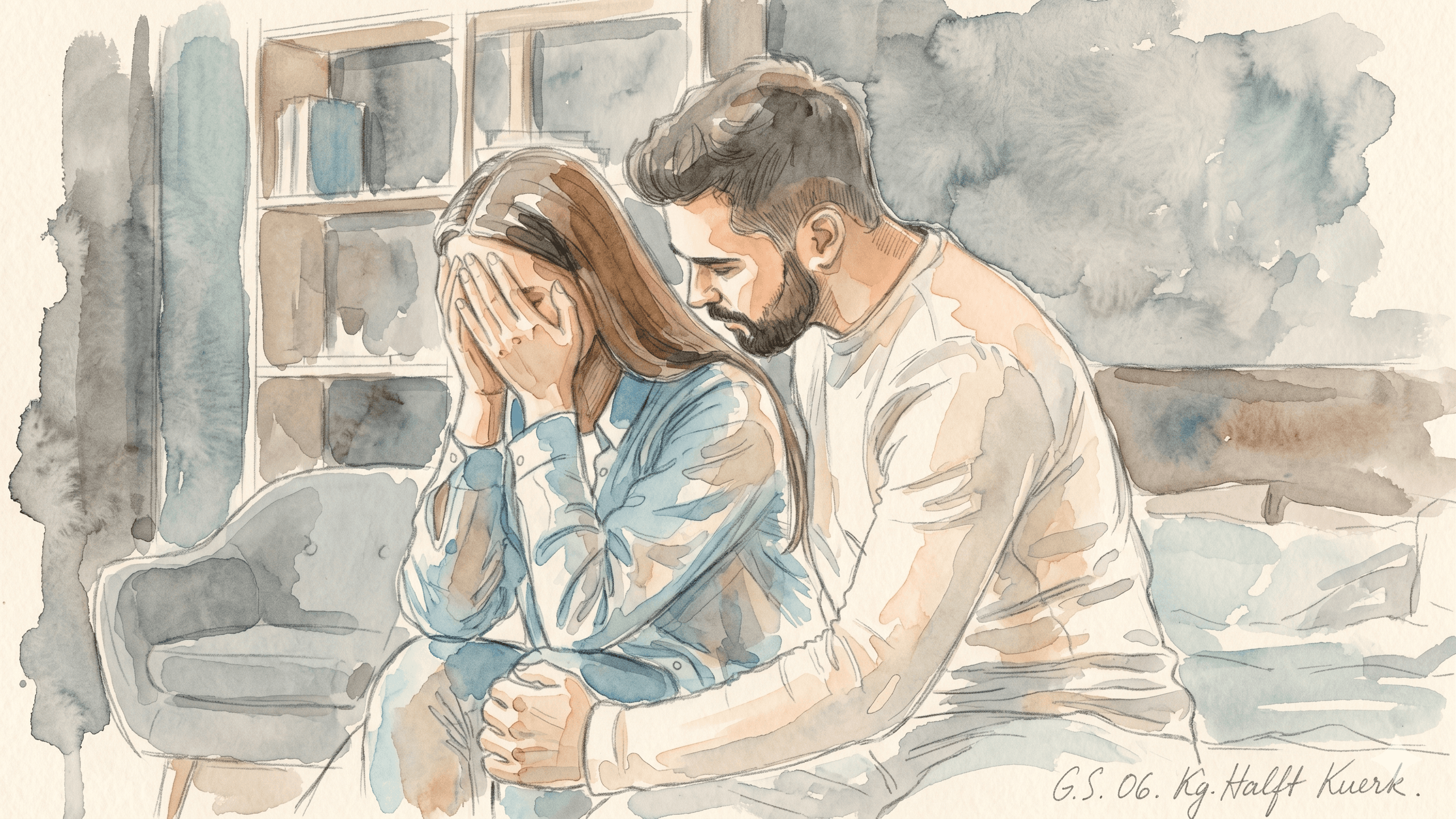
Infertility didn’t just challenge our dream of becoming parents, rather it challenged the very foundation of our marriage.
My husband and I have been together for nearly two decades. But there was a season where our home felt less like a sanctuary and more like a waiting room. The grief was heavy, the uncertainty was constant, and the repeated disappointments began to feel like a slow erosion of the life we had built.
In 2011, our journey eventually led us to Russia to adopt our child. But the "happy ending" didn't fix the scars; rather, the work we did during the struggle is what allowed us to be the parents we are today.
If you are currently in the thick of the "two-week wait" or the heartbreak of another negative test, here is how we kept our relationship from becoming a casualty of the process.
Reclaiming the "Us" from the "Problem"
Infertility has a way of assigning blame, even if it’s unspoken. It’s easy for one partner to feel like "the broken one" and the other to feel like "the helpless observer." We had to consciously decide that infertility was a third party trying to move into our house.
The Shift: We stopped saying "your results" or "my body" and started saying "our journey." We chose to be a united front against the diagnosis, rather than letting the diagnosis sit between us at the dinner table. We looked to our church to support us through this tumultuous journey of infertility which eventually led to adoption.
When your life is dictated by ovulation kits, doctor’s schedules, and financial stress, your marriage can start to feel like a medical project. We realized we were losing the "us" that fell in love twenty years ago.
We had to fight to keep our world big. We made a rule: Date nights were a "No-Infertility Zone." We had to remember how to laugh, how to talk about books or travel, and how to enjoy each other without a "goal" in mind.
Learning a different way to look at this grief was perhaps our steepest learning curve. I grieved loudly; he grieved quietly. I wanted to talk; he wanted to fix it. For a long time, I mistook his silence for apathy, and he mistook my tears for a lack of hope. We had to learn that different isn't wrong. Once we stopped judging how the other person was hurting, we could finally start holding each other through the pain.
Recognizing the Chapter, Not the Book
In the middle of the hormone shots and the waiting, it felt like this was our forever. It felt like our entire legacy would be defined by what we couldn't do. We had to remind each other that while this season was intense, it was just a season. We clung to the biblical verse which hung in my grandparents’ home my whole life: Isaiah 40:31: "But they who wait for the Lord shall renew their strength; they shall mount up with wings like eagles; they shall run and not be weary; they shall walk and not faint." Holding onto the perspective that our life was still happening now, even in the waiting, helped us keep moving forward when the path felt blocked.
Staying Open to the "Pivot"
Adoption wasn't our "Plan A," but it became our most beautiful "Plan Yes." However, we quickly learned that choosing adoption didn't mean the "waiting" was over; it just changed shape. Instead of doctor's offices and medical charts, our lives became a whirlwind of trials and tribulations that tested our resolve in entirely new ways. We moved from the physical exhaustion of infertility treatments to the bureaucratic exhaustion of international adoption.
The Mountain of Paperwork: There were months where it felt like we were drowning in documents: notarizations, background checks, home visits, international apostilles and endless forms. Each piece of paper felt like a tiny, fragile bridge we were building toward our child.
The waiting was no longer marked by a two-week cycle, but by the quiet of a phone that wouldn't ring and the uncertainty of Russia’s legal system, which was very fragile during those years. There were moments when the red tape felt like a wall designed to keep us away from our child.
But in 2012, when we finally brought our child home from Russia, the perspective shifted. Those years of "paperwork and patience" didn't erase the pain of infertility, but they gave that pain a landing place. We realized that the endurance we built during infertility was exactly the strength we needed to navigate the adoption process.
Staying open didn’t mean giving up; it meant realizing that our "family" might look different than we imagined, and that was okay. Resilience isn't about getting exactly what you planned—it’s about growing through the obstacles you never saw coming to reach the child who was meant to be yours all along.
A Note to the Couple in the Waiting Room
Infertility can create a vast distance between two people, or it can forge a bond that is absolutely unbreakable. Often, it does both in the same week.
Our marriage didn’t survive because we avoided the struggle. It survived because, even when we were tired and heartbroken, we kept choosing each other. If you feel like the weight of this journey is pulling you apart, please know that you don't have to carry it alone. Whether through community or therapy, there is a way back to each other.
You are more than your struggle, and your relationship can be the strongest thing you own.