Written by
Lartey Wellness Group | Serving Baltimore, Laurel, Frederick, and communities across Maryland
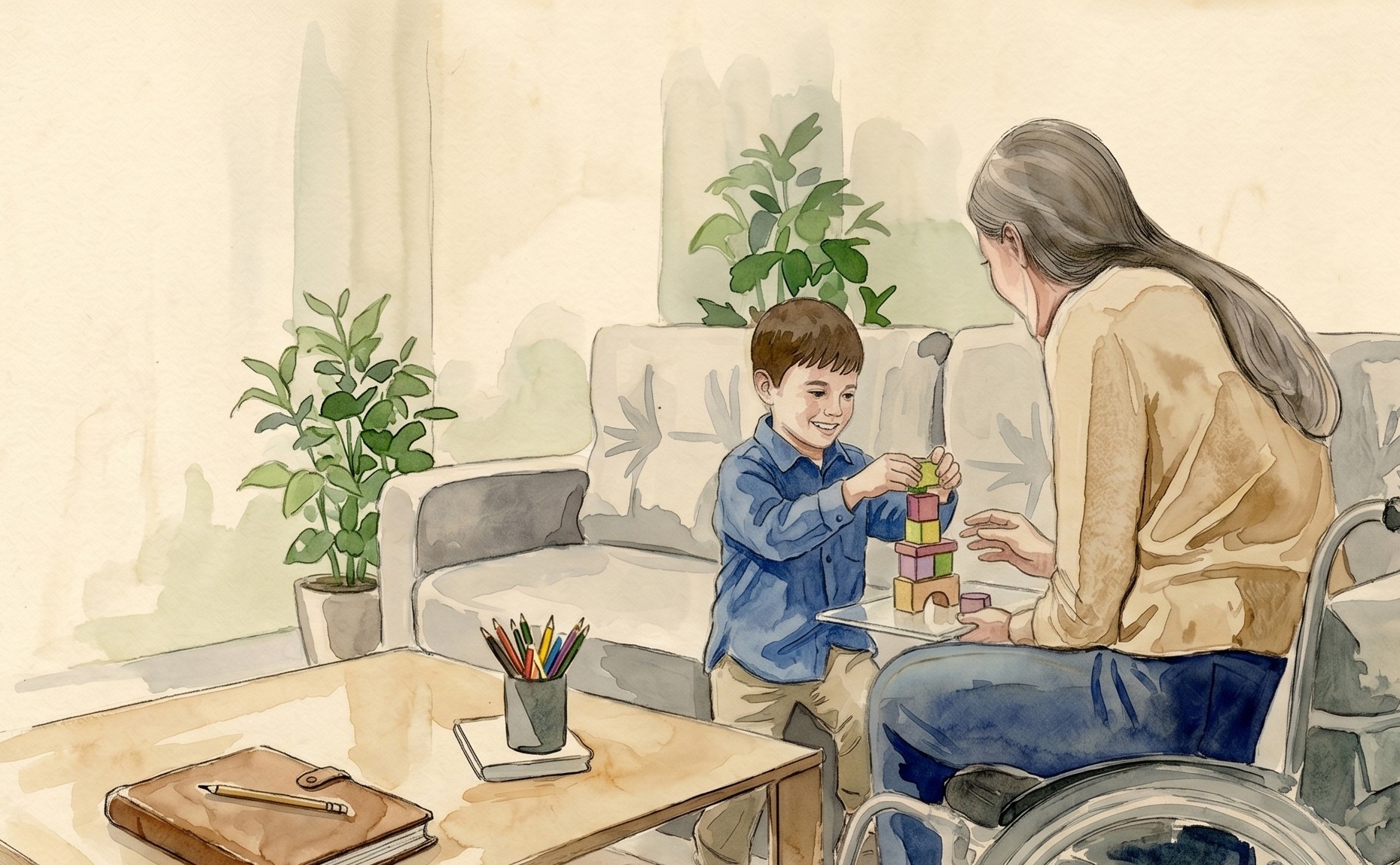
Finding a therapist for your child can feel overwhelming. As a parent, you want the best possible support for your child — but navigating the world of mental health care often raises more questions than answers. What type of therapist does my child need? How do I know if they're a good fit? What if my child refuses to go? This guide is designed to make that journey a little clearer and a lot less daunting.
Why Early Mental Health Support Matters
Children's mental health is just as important as their physical health — yet it's often overlooked until a crisis emerges. According to the CDC, approximately 1 in 5 children in the U.S. experiences a mental health disorder in a given year. Many go without support simply because parents don't know where to start.
The good news: early intervention works. When children receive appropriate mental health support, they are better equipped to manage emotions, build healthy relationships, succeed in school, and develop resilience that carries into adulthood.
If you've noticed changes in your child's mood, behavior, sleep, appetite, or school performance — or if they've experienced a significant life stressor like divorce, loss, trauma, or a major transition — reaching out to a professional is a wise and loving step.
Step 1: Understand What Your Child Needs
Before searching for a therapist, it helps to have a general sense of what's going on. You don't need a diagnosis — that's the professional's job — but reflecting on your child's experience will help you communicate effectively when you make contact.
Ask yourself:
What behaviors or changes have I noticed? (e.g., withdrawal, irritability, anxiety, sadness, school refusal, sleep issues)
When did these changes begin? Was there a triggering event?
How long has this been going on?
Has anyone else — a teacher, pediatrician, or school counselor — raised concerns?
If your child's pediatrician has already flagged mental health concerns, ask for their input. Pediatricians in Maryland often work alongside OMHCs like Lartey Wellness Group to provide coordinated, whole-child care.
Step 2: Know the Types of Therapists
Not all mental health professionals are the same. Here's a quick breakdown to help you navigate:
Licensed Clinical Social Worker (LCSW) LCSWs are trained to address a wide range of emotional and behavioral challenges. They use evidence-based therapies and are common in outpatient mental health settings. Many child therapists in Maryland hold this credential.
Licensed Professional Counselor (LPC) LPCs specialize in talk therapy and are trained to support children, adolescents, and families dealing with anxiety, depression, trauma, grief, and life transitions.
Psychologist (PhD or PsyD) Psychologists are doctoral-level clinicians who can provide therapy and conduct psychological evaluations and testing — useful if you're seeking a formal diagnosis or learning disability assessment.
Psychiatrist (MD) Psychiatrists are medical doctors who can prescribe medication. If your child's treatment may involve medication management, a psychiatrist — ideally one working in coordination with a therapist — is appropriate.
At Lartey Wellness Group, our clinicians include licensed therapists and counselors who specialize in child and adolescent mental health, and we coordinate with other providers when additional support (like psychiatric care) is needed.
Step 3: Look for Specialization in Child and Adolescent Therapy
Not every therapist who works with adults is equally equipped to work with children. Children process emotions differently, communicate in different ways, and benefit from age-appropriate therapeutic approaches.
When searching for a child therapist in Baltimore, Laurel, or elsewhere in Maryland, look for:
Specific experience with children and adolescents — ask about the age ranges they typically see
Familiarity with your child's presenting concern — anxiety, ADHD, trauma, depression, autism spectrum, grief, etc.
Training in child-specific modalities, such as:
Play Therapy — especially effective for younger children who communicate through play
Cognitive Behavioral Therapy (CBT) — evidence-based for anxiety and depression in children and teens
Trauma-Focused CBT (TF-CBT) — for children who have experienced trauma or adverse childhood experiences (ACEs)
Family Therapy — involves the family system, which is often critical for lasting change
Dialectical Behavior Therapy (DBT) — helpful for adolescents dealing with intense emotions or self-harm
Step 4: Consider Practical Factors
Even the most skilled therapist won't be a good fit if the logistics don't work for your family. Consider:
Location and Accessibility Are you looking for a therapist near Baltimore or in the Laurel area of Maryland? Proximity matters — consistent attendance is one of the strongest predictors of therapeutic success. At Lartey Wellness Group, we serve clients across Maryland and offer flexible scheduling to support working families.
Telehealth vs. In-Person Many families in Maryland have embraced telehealth since the pandemic, and for good reason — it removes transportation barriers and can feel less intimidating for some children. Ask whether the practice offers both options.
Insurance and Cost Mental health care should be accessible. Before scheduling, confirm that the provider accepts your insurance plan. Maryland's Mental Health Parity law requires insurers to cover mental health services comparably to physical health services. If cost is a barrier, ask about sliding scale fees or Medicaid acceptance. Lartey Wellness Group accepts a range of insurance plans — contact us to verify your coverage.
Availability and Wait Times Demand for child therapists in Maryland has grown significantly in recent years. Don't be discouraged by wait lists — they often signal a quality practice. In the meantime, ask if the practice has a therapist who can provide an initial consultation or if they can recommend interim resources.
Step 5: Evaluate the Fit — for Your Child and for You
The therapeutic relationship is one of the most powerful predictors of positive outcomes. A technically skilled therapist who doesn't connect with your child won't be nearly as effective as one who does.
What to look for in an initial session:
Does the therapist explain their approach in a way that makes sense to you?
Does your child seem at ease, or at least not resistant after an initial adjustment period?
Does the therapist invite your input and keep you appropriately informed?
Do you feel heard and respected as the parent?
It's normal for children — especially younger ones or those who are anxious — to be reluctant at first. But if after 3–4 sessions your child is still completely shut down or the therapist seems dismissive of your concerns, it's okay to look for another provider.
Questions to ask a potential therapist:
What experience do you have working with children my child's age?
What therapeutic approaches do you use, and why?
How do you involve parents in the process?
How will I know if my child is making progress?
What happens if my child refuses to engage?
Step 6: Involve Your Child (Age-Appropriately)
Children are more likely to engage in therapy when they feel some sense of agency in the process. Depending on your child's age and maturity:
Younger children (ages 3–7): Keep explanations simple. "We're going to meet someone whose job is to help kids with big feelings" is enough.
School-age children (ages 8–12): Be honest but reassuring. Normalize it — "Lots of kids see therapists, just like we see doctors for our bodies."
Teenagers: Adolescents often respond better when they feel respected. Let them know therapy is a space that's largely theirs. Discuss — rather than dictate — the decision to seek help.
Avoid framing therapy as a punishment or as something that happens because they're "bad" or "broken." Frame it as a tool for feeling better and understanding themselves more.
What to Expect from the Process
Therapy is not a quick fix. Most children begin to show meaningful progress after 8–12 sessions, though this varies widely depending on the nature and severity of the concern. Some children benefit from short-term, focused work; others need longer-term support.
Progress may not always look linear. There can be weeks that feel like a step backward — especially as children process difficult emotions in a safe space for the first time. Stay in communication with the therapist, and trust the process.
As a parent, you may also be invited into some sessions or given guidance on how to support your child at home. This family involvement often accelerates progress significantly.
Why Families in Maryland Choose Lartey Wellness Group
At Lartey Wellness Group, we understand that reaching out for help takes courage — and we honor that. Our licensed clinicians bring warmth, cultural competence, and clinical expertise to every family we serve.
We provide outpatient mental health services to children, adolescents, and families in Baltimore, Laurel, and across Maryland, with a commitment to care that is:
Individualized — no two children are the same, and neither are our treatment plans
Family-centered — we involve parents as partners in the therapeutic process
Culturally responsive — we are committed to serving diverse communities across Maryland with sensitivity and respect
Accessible — we accept multiple insurance plans and offer both in-person and telehealth options
Whether your child is struggling with anxiety, depression, trauma, behavioral challenges, grief, or the pressures of growing up, we're here to help.
Take the First Step Today
You don't have to figure this out alone. If you're a parent in Maryland — in Baltimore, Laurel, or anywhere in between — and you're wondering whether therapy might help your child, we invite you to reach out.
Contact Lartey Wellness Group to schedule a consultation or learn more about our services. Our team is ready to answer your questions, walk you through the process, and help you find the right fit for your child and your family.
Because every child deserves to feel supported — and every parent deserves a trusted partner in that journey.
Lartey Wellness Group is a licensed Outpatient Mental Health Center (OMHC) serving children, adolescents, adults, and families across Maryland, including Baltimore and Laurel. Our clinicians are trained in a range of evidence-based therapeutic approaches to support mental health and wellness at every stage of life.