Written by
April Chen, LMSW, CGP, CCTS Licensed Master Social Worker, Certified Grief-Informed Professional, Certified Clinical Trauma Specialist
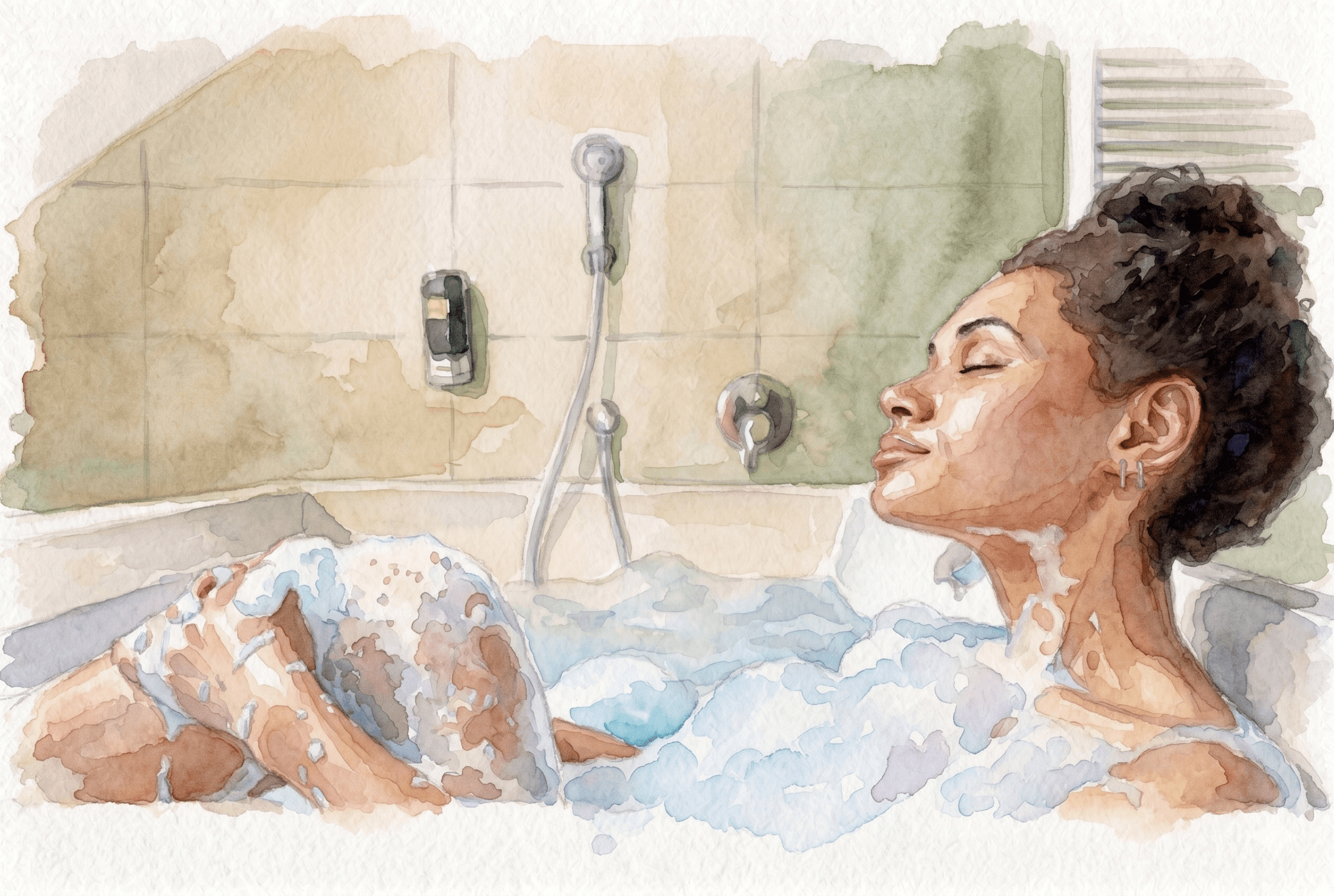
There is a loud, constant hum in our ears right now telling us to just care harder for ourselves.
Meditate longer. Journal deeper. Buy the candle. Protect the peace. But if I’m being honest, both as a therapist and as a human being, I am still tired. And I know you are, too.
The View from My Chair
Every day, I step into my office and wear a dozen different hats. I am a therapist, a case manager, an advocate, and a witness. I hold the heavy, jagged pieces of trauma, grief, and systemic failure that my clients bring in. I love this work. But I also carry the quiet weight of it home with me. I feel that familiar pressure to just "keep going," to be the unflappable pillar of strength. So, I do exactly what I tell my clients to do: I practice self-care. I do the breathing exercises. I take walks.
And yet, some days, it simply isn't enough.
The Lie We’ve Been Sold
We’ve turned self-care into a metric of success. The unspoken narrative is: If you’re burnt out, you must be failing at your wellness routine.
But here is the truth I’ve had to face in my own life: Sometimes the problem isn’t my mindset; it’s my environment.
No amount of morning yoga is going to fix:
A caseload that is physically impossible to manage.
Systems that offer breadcrumbs when people need a feast.
The raw, emotional toll of absorbing other people’s pain for forty plus hours a week.
The expectation to perform miracles with zero resources.
When we treat self-care as the only solution to systemic burnout, we are just gaslighting ourselves. We end up asking, "What is wrong with me? Why am I still drowning when I’m doing all the 'right' things?"
Burnout Isn’t a Character Flaw
I’ve realized that my burnout isn't a sign that I’m a "bad" therapist or that I’m not "resilient" enough. It is a physiological response to chronic, unrelieved demand. For those of us in the "helping" professions, we are doing high-intensity emotional labor in a world that rarely offers a chance to process it. Traditional self-care feels like putting a decorative Band-Aid on a wound that needs stitches.
What I’m Learning About "Real" Care
Real self-care has started to look a lot less aesthetic for me lately. It’s actually quite messy. It looks like:
The "Hard" No: Setting boundaries that make me feel guilty, but keep me sane.
Radical Honesty: Admitting to my supervisor or my peers that a situation is unsustainable and I need to stop accepting new clients. What might mean for you is saying no to more responsibilities.
Lowering the Bar: Allowing myself to be "just okay" instead of "transformative" when my battery is at 5%.
The Ugly Truth: Recognizing that my empathy is a finite resource, not an endless well.
Being honest about my own exhaustion hasn’t made me worse at my job. If anything, it’s made me more human. It allows me to look at my clients and say, "I see why you’re tired. This isn't your fault."
A Better Question
I’ve stopped asking myself, "How can I take better care of myself?" Instead, I’m starting to ask: "What is happening in my environment that self-care was never meant to fix?" Healing isn’t always about adding another habit to your to-do list. Sometimes, it’s about acknowledging that you are a human being responding exactly how a person should to an impossible situation.
Final Thoughts
Please, keep the meditation and the walks. They matter. They help us regulate. But remember: self-care was never meant to carry the full weight of a broken system.
If you’re doing everything "right" and you’re still depleted, you haven't failed. You’re just human. And you deserve more than a bubble bath; you deserve a life that doesn't require you to constantly escape it.