Written by
April Chen, LMSW, CGP, CCTS Licensed Master Social Worker, Certified Grief-Informed Professional, Certified Clinical Trauma Specialist
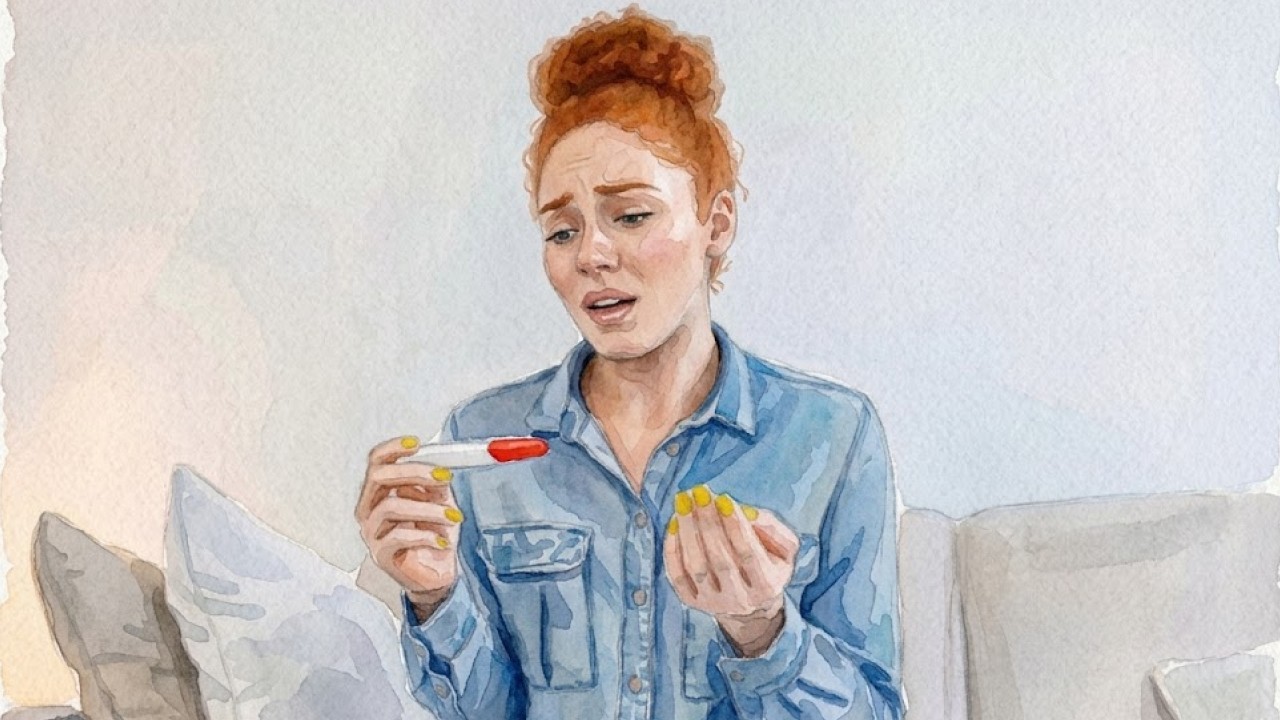
Infertility and miscarriage are grief experiences that many women endure quietly.
When I went through it, I didn’t even recognize it as grief.
Today, as a therapist, I understand exactly what it was.
But at the time, I only knew that my heart was breaking.
My husband and I had a plan for our life together. It was simple and beautiful. Marriage, military life, two kids, and two cats.
At the time, my husband was a busy U.S. Air Force Captain and I was substitute teaching. I also served as a Key Spouse, supporting military families whose spouses were deployed. I filled my days organizing care packages and answering calls from families in distress as they navigated the stress of military life.
Helping others gave my days purpose.
But in the quiet moments, I was grieving.
After losing three pregnancies, I began to wonder if children would ever be possible for us. I cried out to God often.
“Why, Lord? Why can’t I do what a woman is supposed to do?”
Looking back now as a therapist, I can clearly see that I was experiencing profound grief.
But at the time, I didn’t have the language for it.
Baby showers were brutal. Sometimes I simply could not go. I would send a gift instead. For a time, I even distanced myself from friends who had babies because every pregnancy announcement on social media felt like a painful reminder of what we had lost.
People tried to comfort me by saying, “It will happen in God’s timing.”
But when you are struggling with infertility, time can feel like your enemy.
I felt like I was getting older by the minute.
Because we were living on an Air Force base, we were able to have fertility testing done at no cost. We hoped the testing would provide answers.
Instead, it brought more uncertainty.
The doctors explained that fertility drugs were not recommended for me because of the possible risks of blood clots, stroke, or even heart attack. And even if I chose to take those risks, there was no guarantee that I would become pregnant or carry a baby to term.
Hearing that was devastating.
When you long for a child, you want solutions. You want hope.
Instead, it felt like another door quietly closing.
So I prayed.
Often.
I thought about the story of Sarah and Abraham in the Bible, and I prayed that if it was God’s will for us to have children, He would make a way.
And then we waited.
About six months later, I had some free time and began researching adoption. Domestic adoption frightened me. I had read stories about families becoming attached to an infant only to have the child returned to the biological parents.
So we began exploring international adoption.
The more I read about orphanages overseas, the more my heart broke. Some reports described babies lying in cribs all day with no one responding to their cries. I knew we had to do something.
Our first application was to adopt from China.
But we were denied.
Not because of anything major.
Because my BMI was one point above their requirement.
If you have ever struggled with chronic health issues, you know that losing weight is not always as simple as exercising more.
It was another crushing disappointment.
Then our adoption agency told us about Russia.
We had always imagined having a child who looked Chinese because my husband is half Chinese. In fact, I used to joke that I always wanted a Chinese child with freckles.
But we followed the path that opened.
The first step was the home study, which I often call a “paper pregnancy.” The process required mountains of paperwork—medical exams, psychological evaluations, financial records, background checks, and documents that had to be apostilled.
At the time, that meant a four-hour drive in person every time.
Eventually I even stopped working because the process was so time consuming.
In April 2010 we submitted Dossier #1, hoping to be matched with a child under the age of two since attachment theorists emphasize that the first two years of life are crucial for secure attachment development.
Then we waited.
Just as things were moving forward, the adoption world was shaken by international news. A woman from Tennessee named Tori Hansen had returned a child she adopted from Russia—alone, on a plane—with a backpack and a note.
The ripple effects were enormous.
Russia threatened to close adoptions to U.S. citizens.
Once again, we waited.
And prayed.
Then in September 2010, we received the call.
The adoption coordinator said they had a match.
But we had to decide that very day if we wanted to proceed.
They sent us her photo.
I remember staring at it and crying. She looked so small and pitiful, almost as if she had not known much love. But there was a sparkle in her eyes.
And in that moment, I felt a quiet whisper in my heart.
“Here is your little girl.”
Soon we were securing visas and passports for the long journey. We traveled first to Moscow for additional Russian medical exams—even though we had already completed them in the United States. I still remember that the doctor who examined me smelled strongly of vodka.
Then we boarded a ten-hour flight to Vladivostok.
When the orphanage director opened the door and our daughter toddled into the playroom, I cannot fully describe that moment. We were allowed to feed her, hold her, and begin the first fragile steps of bonding.
But after only a week, we had to return home to complete Dossier #2.
Leaving her behind was heartbreaking.
We submitted the final paperwork and waited again, hoping she would be home by Christmas.
But Russia celebrates Christmas in January, so everything paused.
Finally, on a cold February day, we received the call.
We had a court date on February 7th.
We packed again and flew back to Vladivostok.
During the court hearing, the judge asked us many questions.
Then she said one word.
“Da.”
Yes.
We were finally a family.
Because of passport and citizenship requirements, we had to remain in Vladivostok for ten more days before leaving the country. My husband had to return home for military duty, so there I was in a foreign country, knowing only a few Russian phrases, suddenly a brand new mom.
Those early days were overwhelming and beautiful all at once.
Then came a moment I will never forget.
On Valentine’s Day, February 14, 2011, our daughter was officially placed into my arms.
What a phenomenal day that was.
After years of heartbreak, waiting, praying, and paperwork, I was finally holding my child.
Eventually we flew back to Moscow to complete the final steps at the American Embassy so that when we entered the United States, she would automatically become a U.S. citizen.
While waiting, she and I explored the city together. We danced in our hotel room. We visited Red Square and the famous St. Basil’s Cathedral.
Then it was time to come home.
She didn’t sleep a single wink on the flight.
When we landed in Washington, D.C., my mom and my husband were waiting with balloons and a Welcome Home sign.
Our daughter was finally home.
The early months had challenges. She struggled sleeping alone because she had always slept near other children in the orphanage. She was diagnosed with Fetal Alcohol Effects, not full Fetal Alcohol Syndrome, and she desperately needed to gain weight because she was considered failure to thrive.
But within a year she had doubled her weight and spoke perfect English.
Today she is a beautiful young woman—almost eighteen years old.
Did the grief of losing our first babies disappear?
No.
That grief still lives quietly in my heart.
But I also believe that God had a greater plan.
Across the world, in a city called Vladivostok, there was a little girl waiting for us.
And she was always meant to be ours.
If you are struggling to conceive, navigating infertility, considering adoption, or carrying the quiet grief of miscarriage, please know this:
Your grief is real.
Your longing is valid.
And you do not have to walk through it alone.
As someone who has lived this journey personally—and now supports others professionally as a therapist—it would be an honor to walk alongside you.